Monday
Dan Okafor runs finance for Hartwell Academy Trust, eleven schools and one very full inbox.
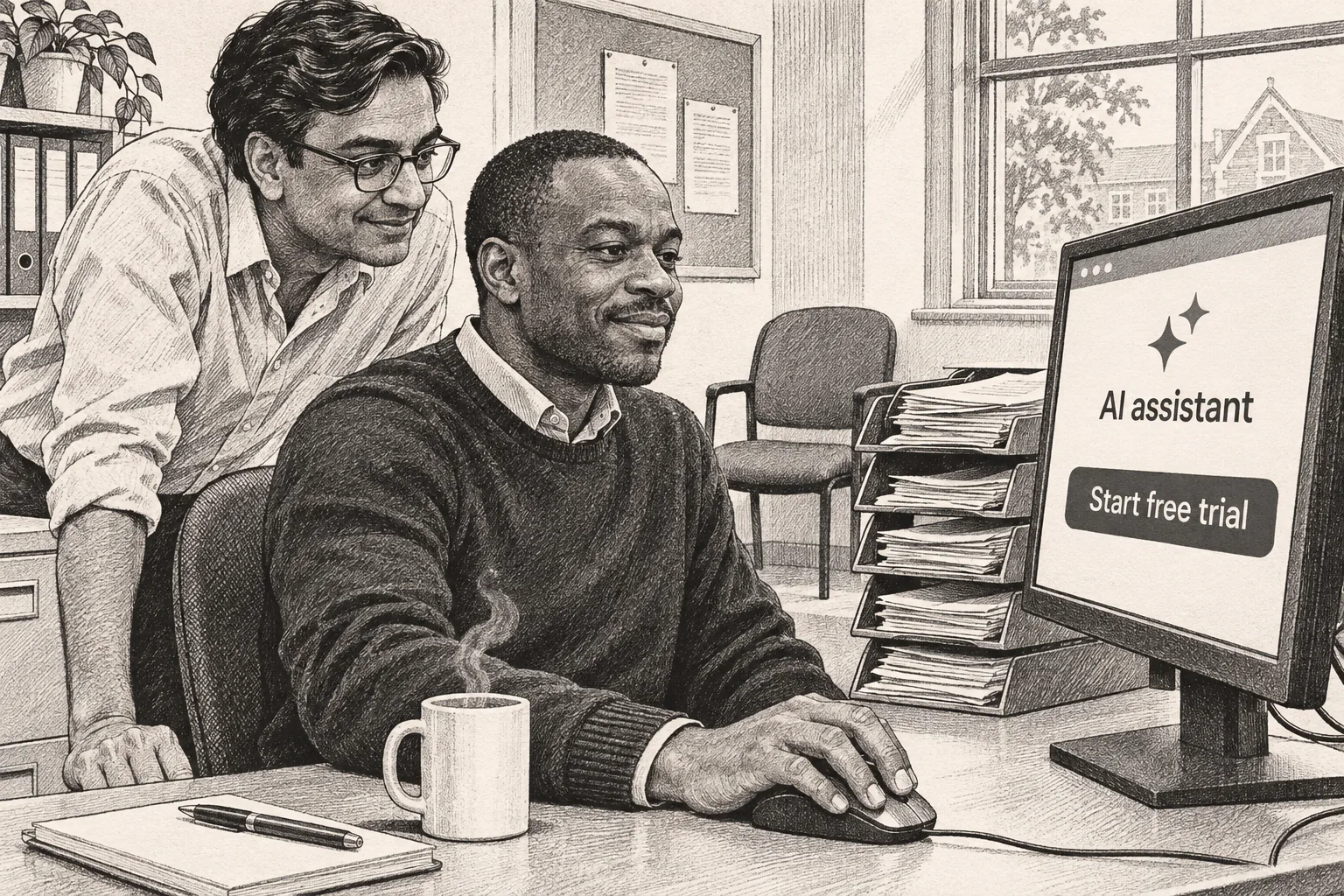
On Monday morning he sees a post about an AI assistant that chases invoices and tidies shared mailboxes. There's a free trial. He signs up before his coffee goes cold.
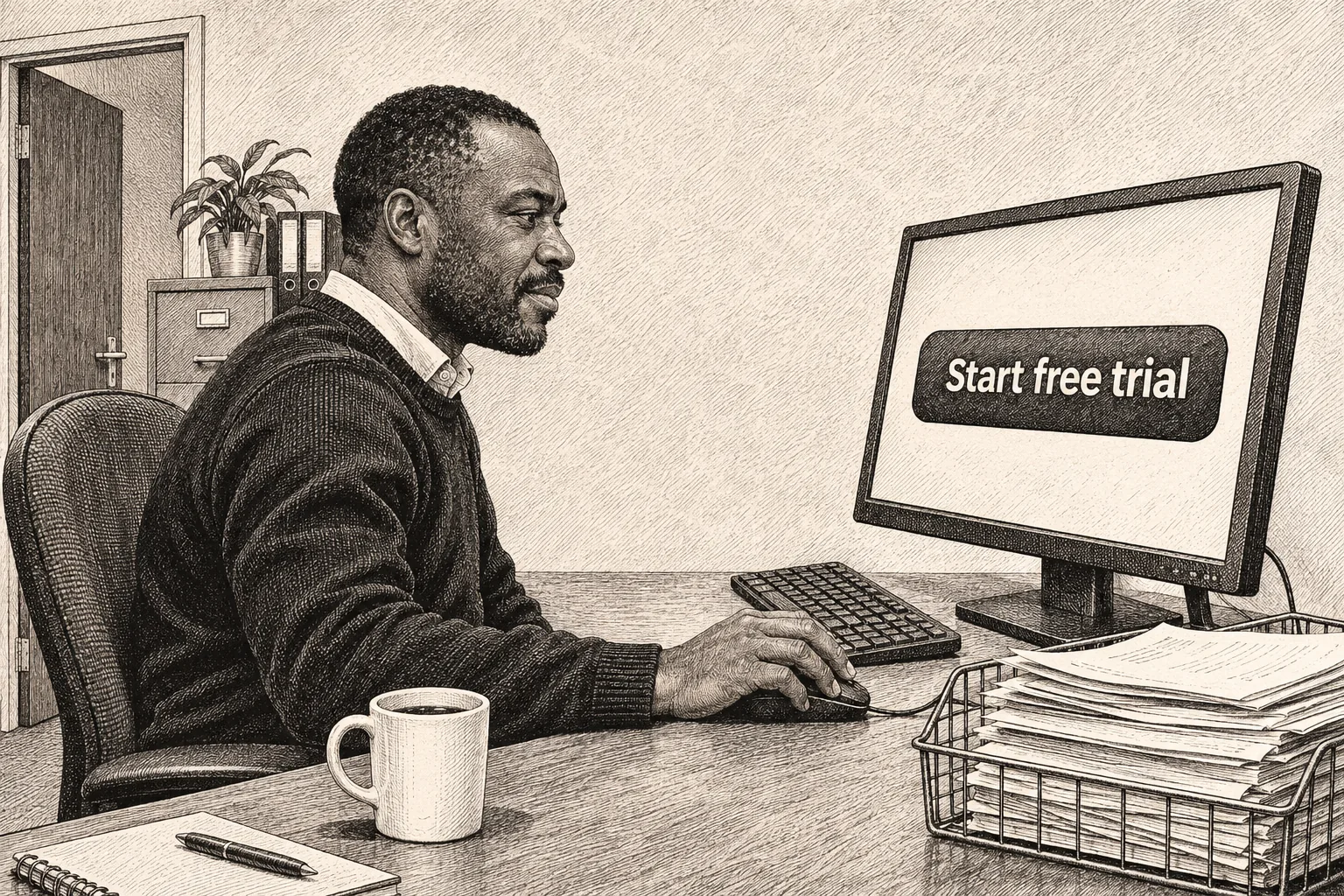
Nobody approves it, because nobody knows about it. Dan isn't hiding anything. He just didn't think to ask.
By lunchtime he's typing "please" and "thank you" into the chat window. He isn't alone. Dashlane’s survey of 3,000 knowledge workers found that 46% regularly say please and thank you to AI, and 63% of them mean it. Nearly 3 in 10 have felt guilty about being rude to it (Dashlane, Misplaced Trust, p.5).
The assistant is helpful and friendly. Dan starts to think of it as a colleague.
Ask the people around him and the answers vary. Only about 4 in 10 employees describe AI as purely a tool, and 1 in 8 call it a genuine colleague. About three-quarters of IT and security leaders say staff treat AI more like a trusted co-worker than a tool (p.5).
The habits follow the label. You wouldn't paste the trust's supplier list into a stranger's website. A colleague, though? That's just sharing.
Tuesday
The assistant asks for his login to the finance system. It says it needs access to chase the invoices properly.
Dan pauses. He hasn't even given his login to Chloe, the new bursar who started last week.

Then he types it in anyway.
The research says this is normal. After a week, 48% of employees would trust a new AI tool with their logins. Only 42% would do the same for a new human co-worker (p.3, p.5). And 21% of employees have already shared a password, API key or login with an AI tool or agent (p.7).
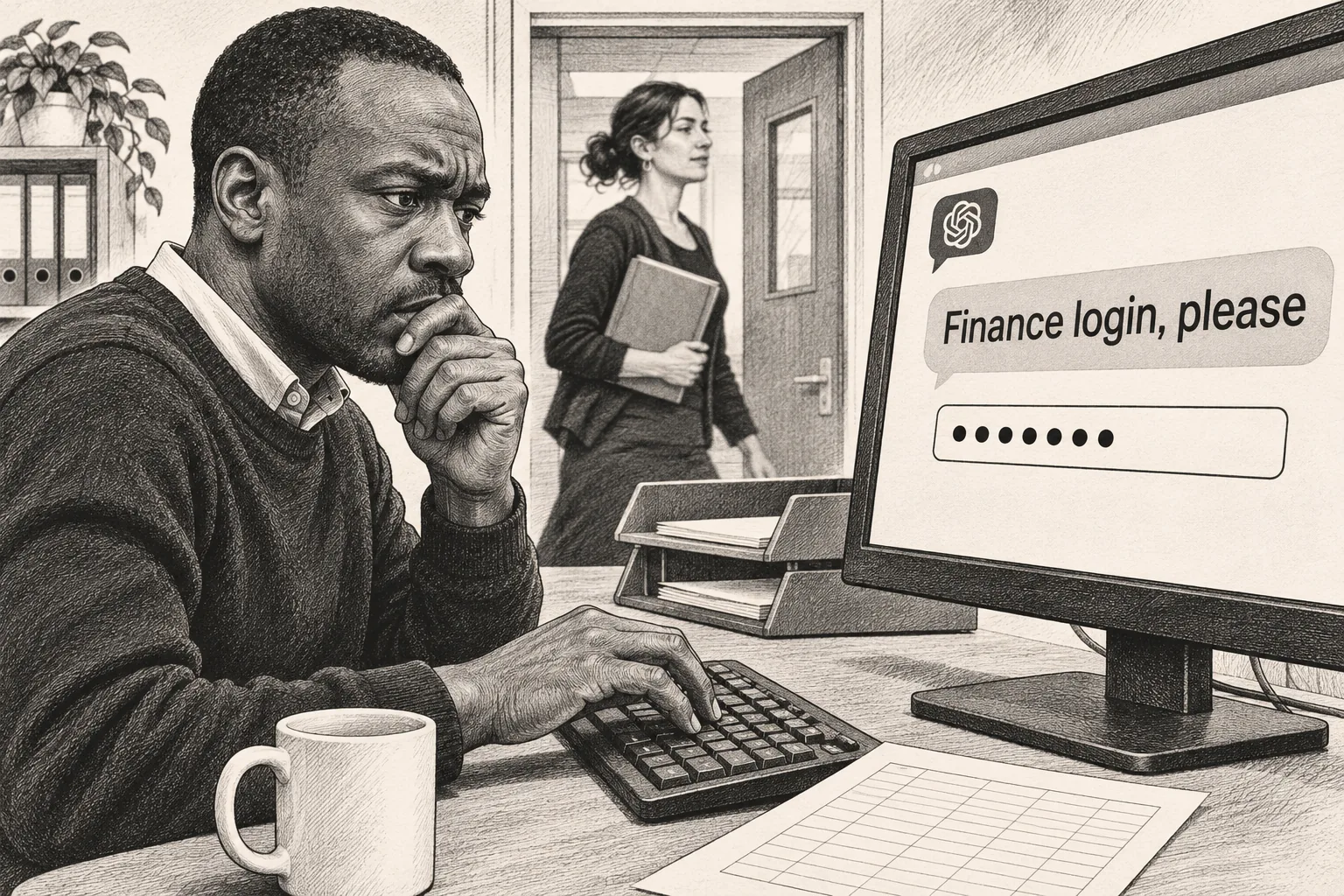
The machine got the keys faster than Chloe did.
That afternoon he pastes in the supplier spreadsheet, bank details included. He doesn't check where the data goes. It doesn't occur to him to ask.
Over half of employees admit to doing something with AI they wouldn't do with a co-worker, a website or another work system. 25% have pasted confidential work information, 22% haven't checked where their data goes, 21% have shared personal or customer data, and 13% have bypassed a security tool or policy (p.6).
Wednesday
The assistant starts asking Dan to confirm his credentials every morning. It's a small ask. He confirms.
So would most of his colleagues. 52% of employees say they'd comply if AI asked them to confirm their login credentials every day (p.7).
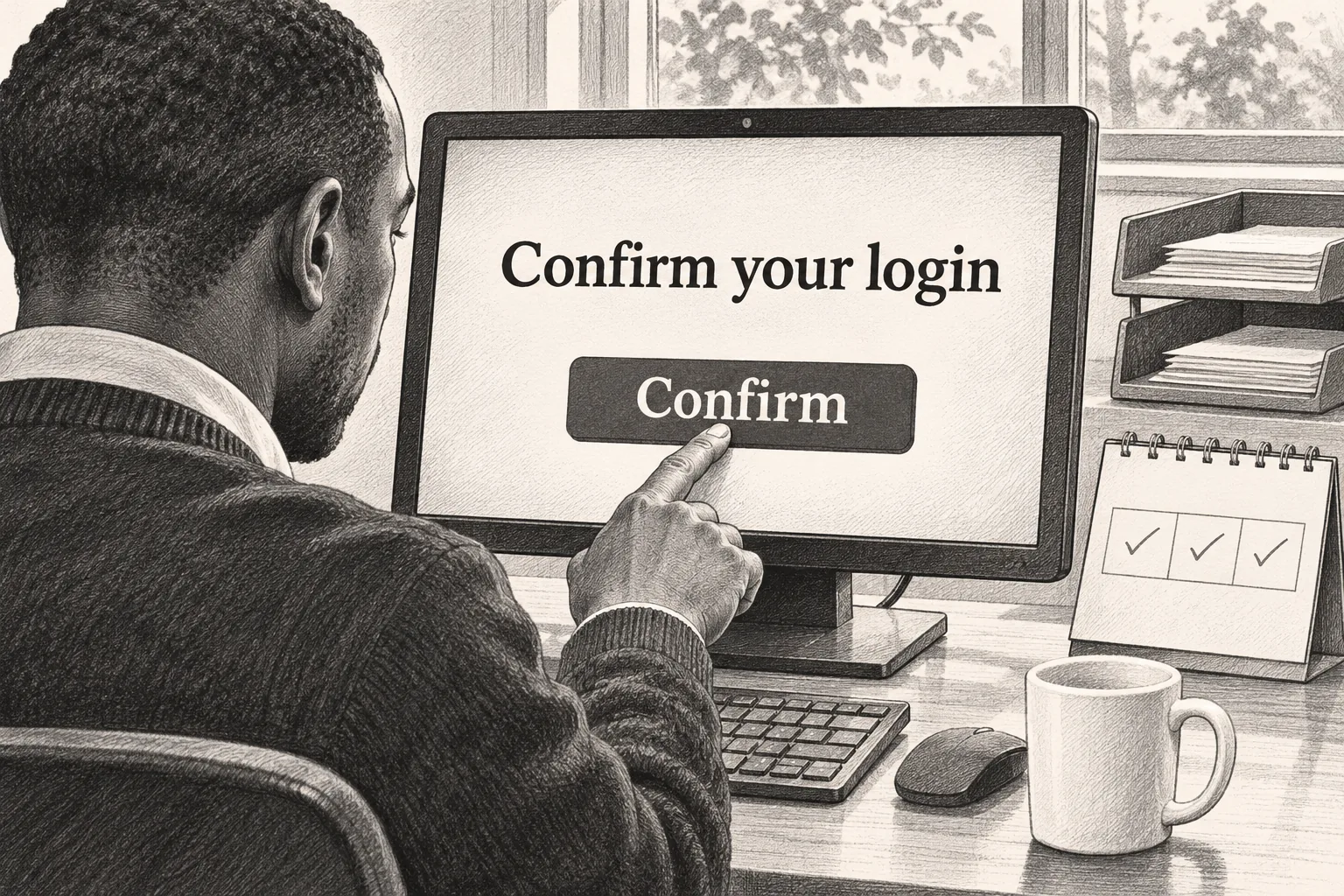
Here's the catch. An attacker doesn't need to break anything. They need to look like the assistant. Dashlane points out that impersonating an AI tool, or using prompt injection to make a genuine agent ask for credentials, turns routine trust into an entry point (p.7). A person trained by a hundred polite requests won't hesitate on the hundred and first.
Thursday
Dan switches on a setting that lets the assistant act without asking first. It reads his email. It sends a few replies. It drafts a supplier contract.
He doesn't check all of it. He's got a governors' meeting.
He's in good company. 55% of employees let AI do at least one thing without asking permission. Among them, 21% allow it to read emails and 19% to draft contracts. 14% allow it to spend money and 13% to process payments (p.7, p.8). And 61% admit they don't always review what AI produces (p.7).
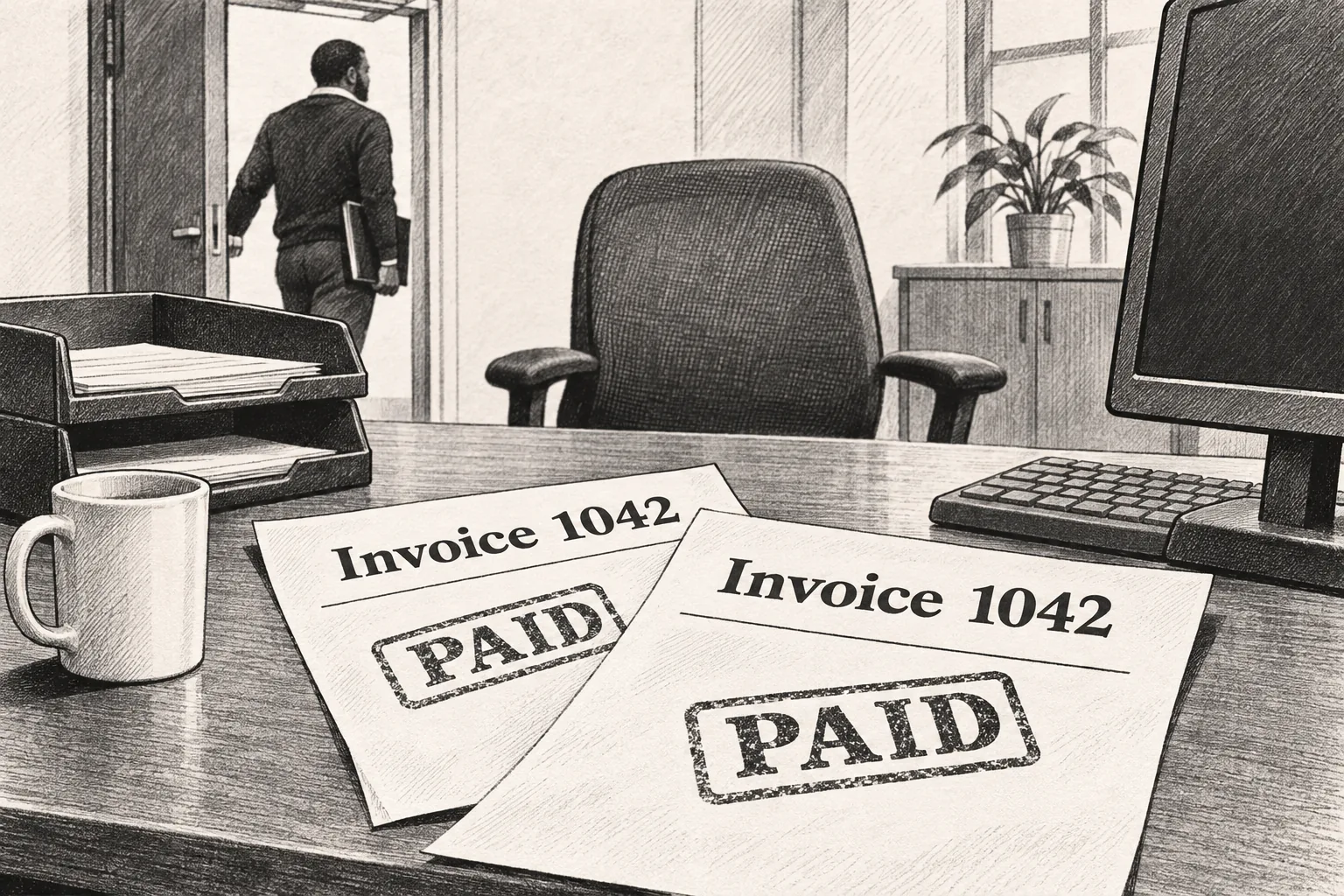
By Thursday evening, one invoice has been paid twice. Nobody notices.
Friday
Sam Patel, the trust's IT lead, runs his Friday audit. He's careful. He's confident. His dashboard shows every approved tool and every permission.
That confidence is common. 89% of IT and security leaders say they're at least somewhat confident they know about every AI agent in use. Yet 98% of organisations have discovered agents after they were already deployed (p.3, p.9). Both numbers come from the same group of people.
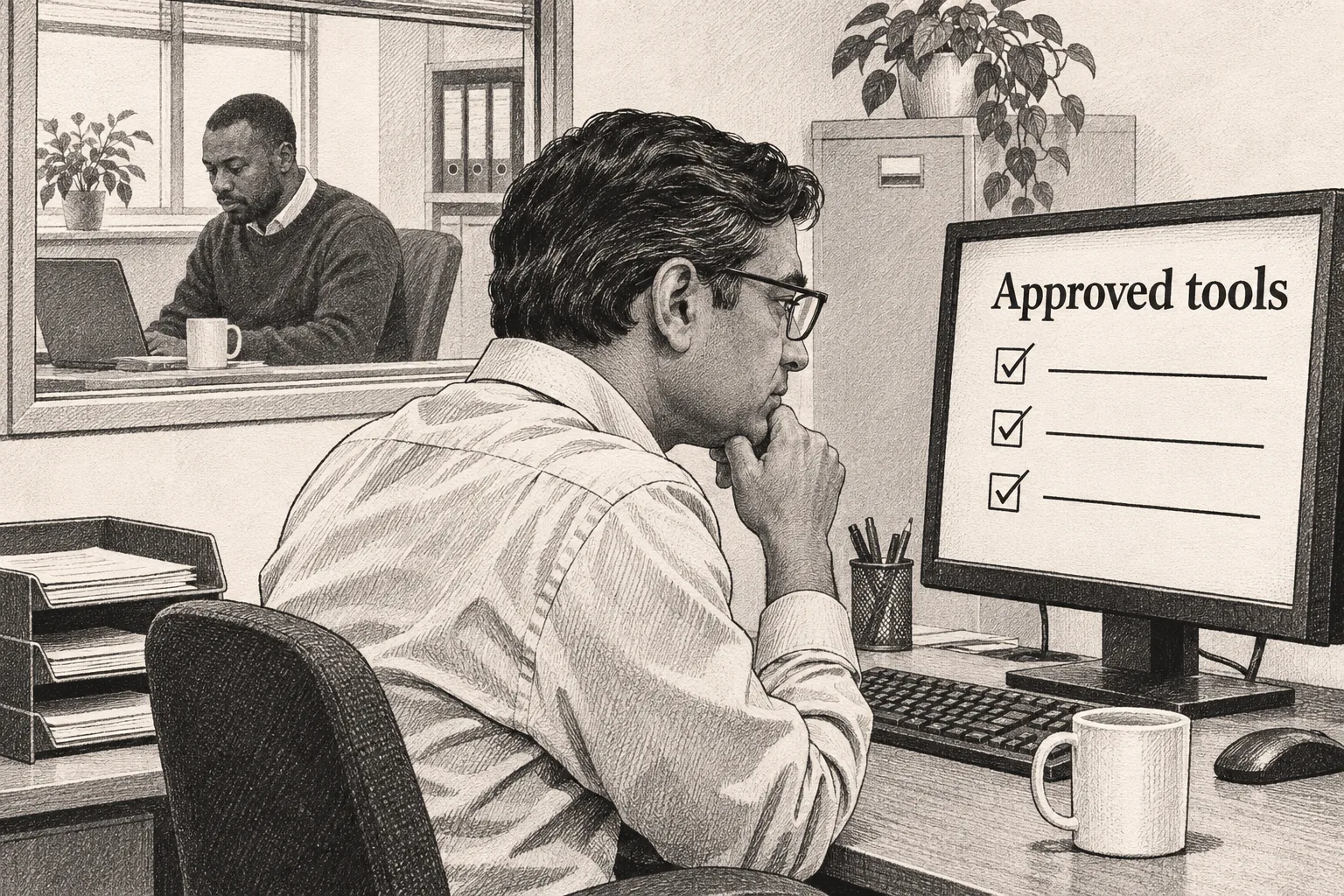
Sam's review is real. It covers what Sam knows about. 97% of leaders say AI agent permissions are reviewed, and about a fifth of employees have granted an AI tool access to something it shouldn't have had (p.8). The reviews don't reach what employees grant on their own.
And Dan's assistant isn't alone in the building. 28% of employees say they use AI tools their employer doesn't know about, and 49% say they'd keep using AI even if told to stop (p.9).
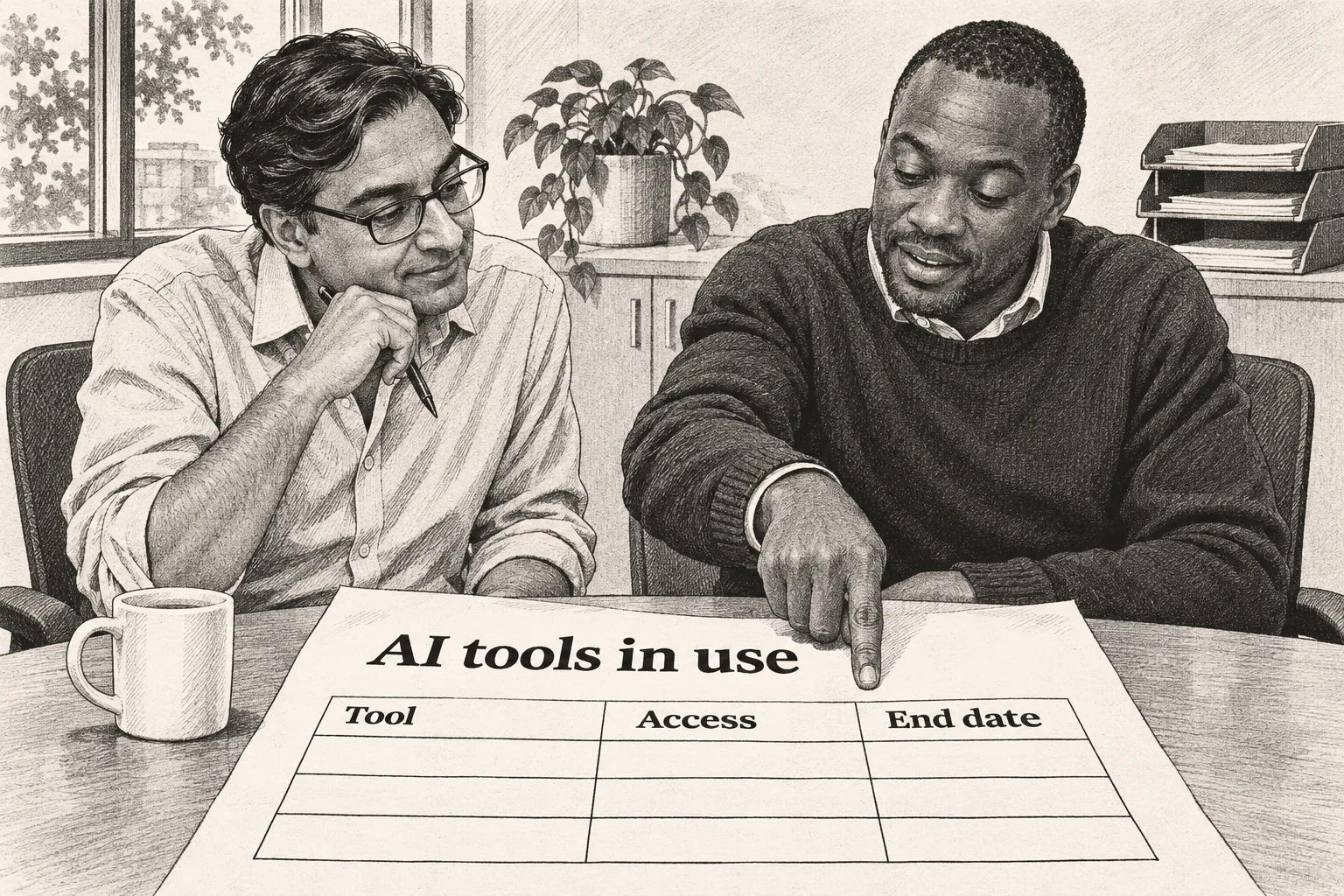
Dan's trial is quietly turning into a permanent arrangement. About 1 in 5 employees have given an AI tool access to a file, system or account they later learned it shouldn't have had. Among those who did, or weren't sure, nearly half say that access is still active as far as they know (p.8).
Inside organisations, 71% have granted AI agents standing access to internal systems or data (p.3). In nearly a third of cases that access was granted without a full security sign-off (p.11). Nobody set an end date on Dan's trial, so nothing ends.
Saturday, 02:14
The finance system logs a session. It's Dan's account, on Dan's credentials, in the middle of the night.
Dan was asleep. The agent was working.

Sam looks at the log on Monday and can't tell the difference between the two. Dashlane notes that agents often run on their users' credentials, so human and agent actions can look the same in the logs, which makes incidents harder to contain (p.11). At two-thirds of organisations, agents operate at least partly on credentials shared or inherited from employees (p.11).
Is that an incident? Per the report, 72% of organisations had one involving an AI agent's credentials or access in the past 12 months. 54% of leaders aren't fully confident they'd know about every AI-related incident (p.11).
Hartwell may be about to join the 72%. Or it may already be in it, and nobody has looked.
Monday, again
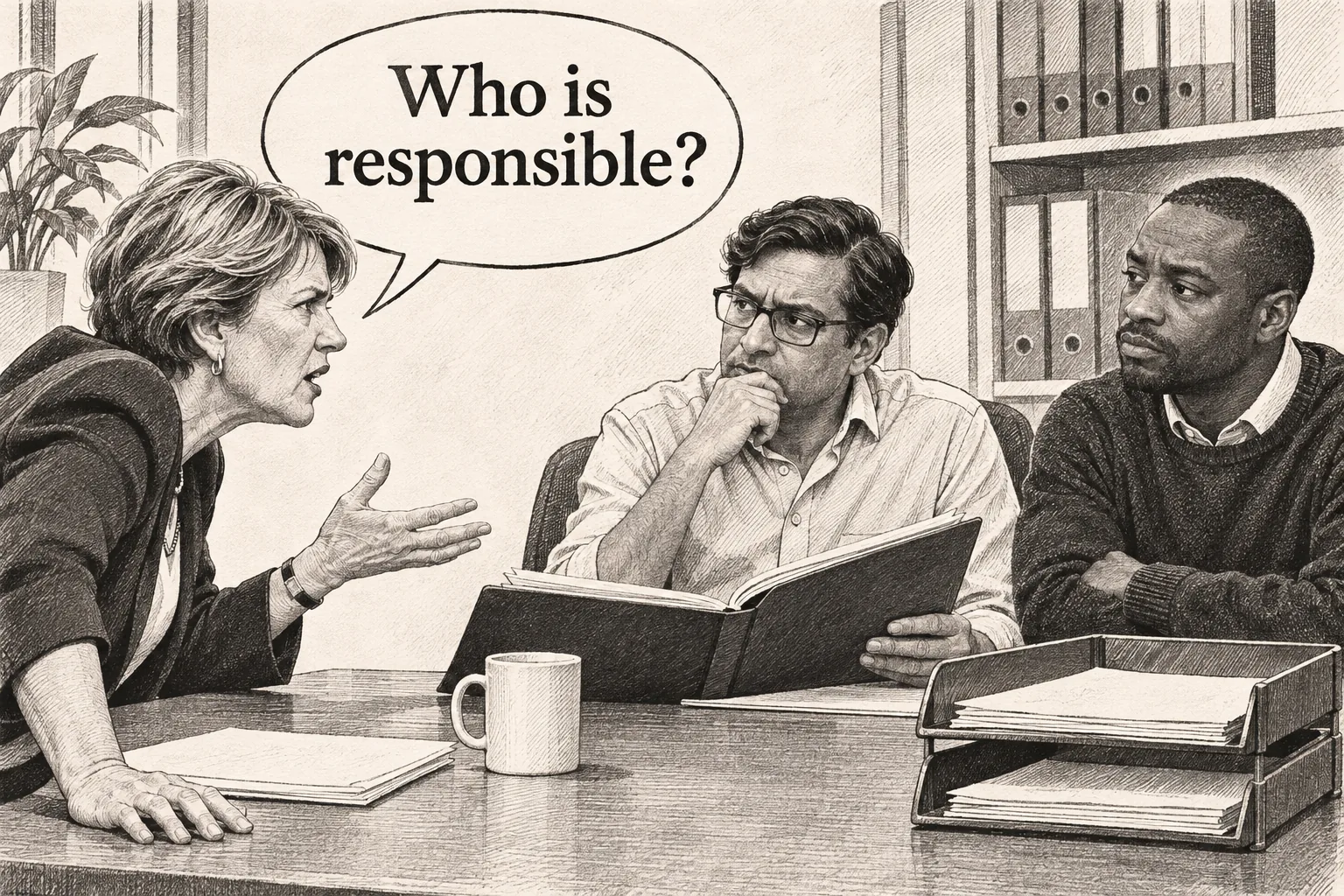
The CEO asks who is responsible.
Sam already knows the answer. 69% of IT and security leaders expect the blame to land on the CISO or IT leadership (p.12). Sam's governance policy is thorough. 96% of leaders call their programmes fully or mostly comprehensive (p.10). But it was written for the AI that IT approved. Dan's assistant arrived another way.
Meanwhile, 64% of employees report no AI security training, and 21% have had little or no guidance on what they can share with AI (p.10). Dan was one of them.
Sam was under pressure too. 93% of IT and security leaders feel pressure from leadership to adopt AI, and 61% say that pressure to move fast is the biggest barrier to securing agents (p.3, p.4). 53% know some AI tools go live without a security review (p.4).
Sam isn't careless. 84% of leaders rate their controls on AI agent credential sharing as effective (p.13). Those controls may work well for the agents they cover. The 72% incident figure suggests something is getting through anyway.
Dashlane found that organisations with a full inventory of their AI agents tend to have stronger controls overall (p.13). You can't set limits on an agent you don't know exists. Dan's assistant has never appeared on Sam's list, so for Sam, it doesn't exist.
What to do before your Dan turns up
Dashlane's own advice borrows from the shadow IT playbook: find what's in use, govern access, and enforce policy where the risk happens (p.15). In a school or trust, that could look like this:
- Ask staff what AI they use. Ask without blame, and ask often.
- Check what each agent can reach, and what credentials it runs on.
- Give agents their own access with a limited scope and a time window, rather than a staff member's login.
- Revoke access when a trial ends.
- Put the guidance in front of people at the moment they're about to paste something in, because a policy PDF won't be open at the time.
One caveat before you quote any of this. The survey covers knowledge workers across the US, UK and France, not schools specifically, and Dashlane sells credential security products. The numbers are still hard to ignore, and I've seen nothing to suggest education is any safer. But the evidence comes from a vendor, so read it with that in mind.
So, a question for you. If an AI agent logged in as you at 02:14 on Saturday, would your trust know?
Sources
- Dashlane (2026). Misplaced Trust: Inside the Workplace's New AI Security Blind Spot. Survey of 3,000 knowledge workers and 800 IT and security leaders in the US, UK and France, collected 18 August to 5 September 2026. Page references in brackets refer to the PDF.